Token on the Chain, Nothing on the Screen: The Metadata Crisis Quietly Hollowing Out NFT Collections
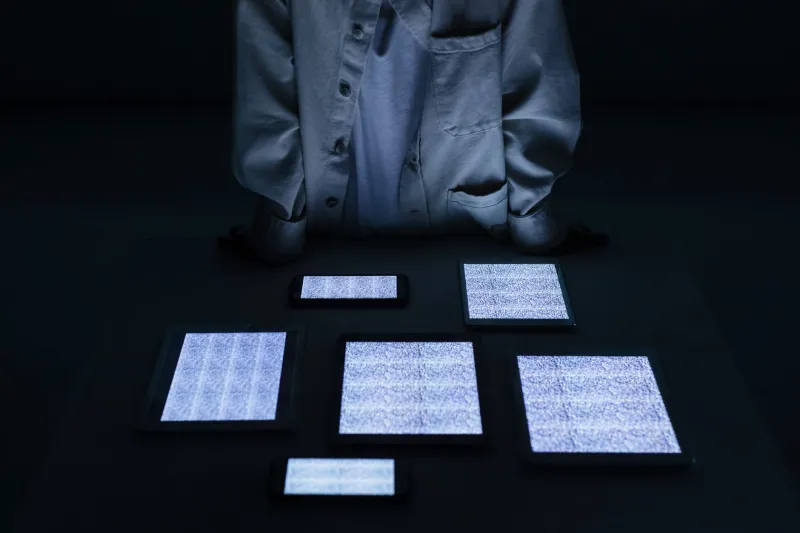
There is a version of ownership that feels complete until the moment it isn't. For a growing number of American NFT collectors, that moment arrives without warning: a beloved piece in a digital wallet renders as a blank square, a broken link, or a generic placeholder image. The blockchain record is intact. The transaction history is verifiable. The token exists. But the asset it was supposed to represent has quietly ceased to exist anywhere that matters.
This is not a fringe problem. It is a structural condition baked into how most NFT collections were built, and it deserves the kind of rigorous attention that collectors have historically reserved for floor prices and trading volume.
What an NFT Actually Contains
To understand why metadata rot occurs, it helps to understand what a non-fungible token actually stores on-chain. In the vast majority of cases, the blockchain entry for an NFT contains three elements: a unique token identifier, a record of ownership, and a URI—a web address pointing to a JSON file that describes the asset. That JSON file, commonly called the metadata, contains the image URL, the trait attributes, the title, and any other descriptive information associated with the piece.
Here is the critical distinction: the blockchain holds the pointer. It does not hold the asset itself. The image, the animation, the audio file—these live somewhere else. And where they live determines how durable your ownership actually is.
When that somewhere else is a centralized server operated by a startup that has since pivoted, run out of funding, or simply stopped paying its hosting bill, the pointer becomes a dead end. The token remains yours in a technical sense. What it was pointing to is gone.
The IPFS Assumption and Why It Doesn't Always Hold
The standard response from the NFT industry to concerns about centralized hosting has been the InterPlanetary File System, or IPFS. IPFS is a decentralized storage protocol that distributes files across a network of nodes, theoretically making content persistent even if any single server goes offline. Many projects marketed their use of IPFS as a guarantee of permanence.
That guarantee has conditions most collectors were never told about. IPFS content is only available as long as at least one node on the network is actively "pinning" the file—keeping a local copy and serving it to requests. If the project that deployed the NFT collection was responsible for running the pinning service, and that project shuts down, the files become unpinned. Once unpinned, they are subject to garbage collection. The IPFS address remains valid. The file it references may no longer exist.
Solutions such as Filecoin and Arweave offer more robust persistence guarantees by building economic incentives into long-term storage. Collections deployed on these networks carry meaningfully lower metadata risk. But collectors must verify this themselves—marketing copy from a project launch is not a reliable guide.
How to Audit What You Actually Control
A responsible review of an NFT portfolio in 2024 involves more than checking a wallet balance. American collectors who want an honest picture of their holdings should work through the following verification steps.
Step one: Retrieve the raw token URI. Using a block explorer such as Etherscan or a blockchain data API, locate the token contract and call the tokenURI function for each token you hold. The output will reveal where the metadata is actually stored. An address beginning with ipfs:// indicates IPFS storage. An address beginning with https:// indicates centralized hosting. An address beginning with ar:// or pointing to Arweave indicates decentralized archival storage.
Step two: Test the metadata endpoint directly. Paste the URI into a browser or a tool such as IPFS Desktop. Confirm that the JSON file loads and that the image URL embedded within it resolves to an actual file. If either request fails, you have identified a broken metadata chain.
Step three: Check for on-chain storage. A small number of collections—Art Blocks, certain Nouns derivatives, select generative projects—store all image data directly on the blockchain as base64-encoded SVG files or similar formats. These tokens carry no external dependency. If your token's URI returns a data: prefix rather than a web address, the asset is fully on-chain and immune to server failure.
Step four: Verify pinning status for IPFS assets. Services such as Pinata and NFT.Storage allow you to check whether a given IPFS content identifier is actively pinned. A file that exists on IPFS today but is pinned by only a single, project-controlled node is one funding shortfall away from disappearing.
The Legal and Financial Dimension
For American collectors who acquired NFTs at meaningful price points, metadata degradation introduces complications beyond aesthetic disappointment. When an asset purchased for thousands of dollars renders as a broken image, questions of value, marketability, and tax basis become genuinely contested.
The IRS currently treats NFTs as property for tax purposes. A collector who purchased a token at a high valuation and later discovers the underlying asset has degraded may have grounds to argue for a reduction in fair market value—but documenting that argument requires records that most collectors have not maintained. Screenshots of the original rendering, archived copies of the metadata JSON, and timestamped evidence of the degradation all become relevant.
More practically, a token with broken metadata is nearly impossible to sell at its original valuation. Secondary marketplaces display the image. If the image is gone, the listing is effectively invisible to buyers who don't already know the collection.
What Durable Digital Ownership Requires
The blockchain is a reliable ledger of who holds what token. It is not, by itself, a storage system for the assets those tokens represent. The gap between those two facts is where metadata rot lives.
Collectors who want genuine ownership—not conditional custody of a pointer—should prioritize fully on-chain collections, verify Arweave or Filecoin storage for projects that claim decentralized persistence, and maintain their own archived copies of metadata and image files for high-value holdings. The chain records the claim. Collectors must do the work of ensuring there is something behind it worth claiming.
At S8B Shop, the principle that guides our perspective on digital commerce is straightforward: ownership means control, and control requires verification. A token is a starting point, not a destination.